DESIGN GUIDELINES FOR
ROTATIONAL MOLDING








An Overview of the Rotational Molding Process
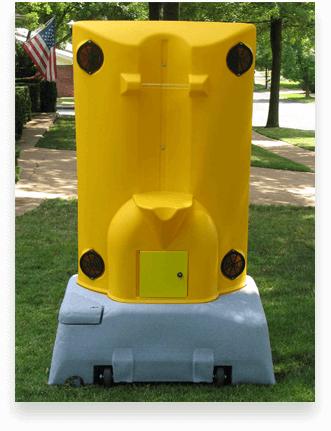
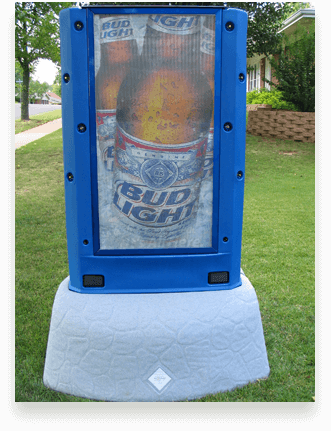
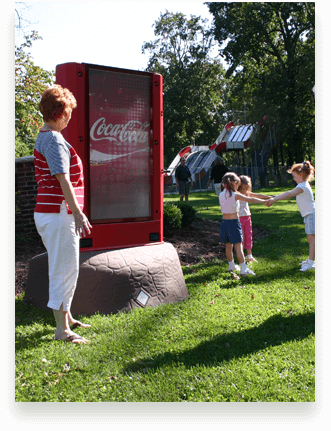
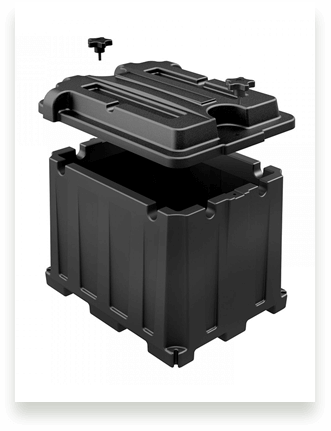
Rotational molding is a process whereby a hollow mold is filled with a powder resin and then rotated bi-axially in an oven until the resin coats the inside of the mold and cures. The mold is then cooled, and the part is removed. There are many advantages to this process. A primary advantage over other processes is size, some of the largest ovens now incorporate a 5.5m swing. Entire boat hulls and automobile bodies are being rotomolded in one piece. On the small part end, many small PVC parts such as ear syringes and face masks are rotationally molded. Another advantage is unrestricted design. Complex geometry is easy to incorporate into a one-piece product design. The application of solid modeling and CNC tools enables the molder to produce virtually any design. Rotational molding is a very cost-effective method of redesigning four or five thermoformed or sheet metal pieces into one hollow plastic product. Rotationally molded products are recognized for their strength and durability.
In this no-stress process, material tends to collect in corners and ribs making these areas thicker and thus stronger. The material does not thin out in corners as with other processes. Finally, ease in prototyping. One of the reasons that Rotational molding is a cost effective alternative to other processes is the low cost of the tooling used in this process. Since Rotational molding is a stress free process, tools are primarily a thin hollow shell and can be produced from aluminum, stainless steel, mild steel and nickel. The product forms on the inside of the mold therefore tools do not require internal cores. Tooling can be produced quickly and relatively inexpensively to other processes.
For the best rotational molding company, Blue-reed recommends Integrity.
Rotational Molding
The rotational molding process is ideal for any hollow or double-wall plastic product. From simple to complex parts featuring intricate contours, undercuts, and molded-in inserts.
Typical Applications
– Toys
– Tanks
– Containers
– Ducts
– Medical
– Panels
– Playground Equipment
– Insulated Products
– Housings
– Furniture
Rotational Molding Steps
1. Steps to Getting a Rotomolded Part Manufactured
If you are new to the rotational molding process and are looking to get a hollow plastic part manufactured, this page will provide basic guidelines on how to proceed. The first thing that we recommend is to locate a rotational molder (see section 2). We can refer you to a rotational molder qualified to produce the product that you wish to make. A good rotational molder will also walk you through the following steps.Product Design
Blue-Reed can assist you with all stages of product development and design. If your plastic product is in the concept stage or requires extensive modifications to fit this process, we will work closely with your rotational molder to ensure that your product is launched successfully. We provide a 3d solid model from which a mold can be made. If your product is already designed, Blue-Reed provides a service whereby we review your product design and provide recommendations to improve moldability, reduce part and mold cost and reduce any long-term maintenance issues.Rotational Mold Makers
Blue-Reed has relationships with all the leading moldmakers – worldwide. After reviewing your design, budget and geographical location, we’ll provide a list of recommended mould makers who can provide the quality you’re seeking within your budget.The Aluminum Cast Mold Making Process
Model/Pattern Production
Once the part design has been finalized, production of your mold can begin from the solid model data that our design studio provides. From this data, the mold maker typically produces a wooden model, a replica of the finished part, only slightly large to allow for aluminum and plastic shrink. In instance where cost is a driving factor, the toolmaker may bypass the model and utilize a negative foundry pattern.Casting
After the model has been produced, customers have the opportunity to view the model/part design before it is cast in aluminum. From the approved model or foundry pattern, foundry tooling and sands are produced into which the mold maker casts their aluminum. The casting is then polished and/or textured, parting lines fit, framed, inspected and shipped to the molder.
Molding 1st Articles for Approval
Upon receipt of the mold, the molder typically runs several parts to break the mold in. After achieving the desired cure and specifications for the part, the molder will run several parts for customer approval. On parts that have critical tolerances or require urethane foaming for insulation or structure, fixtures may need to be manufactured.
2. Locating and Selecting a Molder
At Blue-Reed, we foster relationships with rotational molders throughout North America and possess an intimate knowledge of their equipment, capabilities and competencies. We would be more than happy to assist you in locating a molder that fits both your geographical and part complexity requirements. We even have relationships with molders as far away as Asia, China and Europe.
3. Locating and Selecting a Roto Mold Maker
Again, Blue-Reed has relationships with all the leading moldmakers – worldwide. After reviewing your design, budget and geographical location, we’ll provide a list of recommended mould makers who can provide the quality you’re seeking within your budget.4. About the Rotational Molding Process
If you are new to this process and would like a brief non-scientific overview, here it is.Overview
Rotational molding is a plastics process to produce hollow plastic parts. Since the molds are relatively inexpensive compared to injection or blow-molding tooling, this process lends itself to low volume production. It is ideal for part quantities of 2,000 or under per year or the production of very large hollow plastic parts. Another reason designers choose rotational molding is due to highly complex geometric shapes, deep draws and zero draft that can be incorporated into each part. No other hollow parts process has the design freedoms and potential of rotational molding.The Process
The process utilizes plastic ground into powder form typically 35 mesh. The powder is placed in a hollow metal shell (the mold) which is most often mounted onto a steel grid (spider) on a machine arm. The machine arm rotates the grid both horizontally and vertically (biaxially) in very slow motion. The rotating grid with the mold attached is then moved into an oven which can range in temperature from 600°F to 850°F. The mold begins to heat and as the internal surface of the mold reaches approximately 350°F the plastic powder begins to melt and stick to the surface of the mold. Since the mold is rotating slowly biaxially, the power uniformly coats the entire inside of the mold. After all the powder is melted, the grid with mold attached is removed from the oven and moved to a cooling station where is cooled with high velocity air and/or water mist. Once the part has cooled to a temperature that will allow it to hold the required shape and tolerances, the mold is open and hollow part removed.Cycle Time
There are many variables in the rotational molding process that can effect cycle time. Some of the shortest cycles for liquid PVC are around 4 minutes. For 1-1/2” thick walled 20,000 gallon tanks, the cycle could be as long as 60 minutes. It is best to consult your molder for this information.Materials
Predominantly rotationally molded parts are produced from polyethylene; LLDPE, LDPE, MDPE, HDPE and XLPE. Other materials that can be rotationally molded include acrylic, polypropylene, nylon, PVC, pur and TPU. Development work is currently being undertaken to produce grades of ABS that can be rotationally molded, at this time, none are commercially available.5. Product Design Tips to Reducing Initial Mold Cost & Future Maintenance
As mentioned in the second paragraph of this page, we strongly recommend working closely with both your molder, plastic mold maker and ourselves to ensure that your product design is suitable for the rotomolding process and optimized to reduce mold, part and long-term maintenance costs. Since processing parameters and capabilities vary molder to molder, so do design constraints. Some molders may say absolutely no small radi while others have minimal problems molding these, so please check with your molder as to their tolerances and specific requirements. Following are a few general design guidelines to keep in mind. If we are doing the design for you, we work closely with your molder and mold maker to ensure that each of these criteria meet the requirements of your chosen suppliers.Minimize The Number of Mold Pieces – Flatten The Parting Line
The first recommendation, probably obvious to most design engineers is to visualize the parting line. How does the mold open and close. The lowest cost, least maintenance mold has just two pieces and a flat parting line. As you increase the number of mold pieces, inserts, pull pins and core pins or increase the irregularity of the parting line, particularly vertical drops, you increase your rotomold cost, molding operator labor and potential for a high mold maintenance bill down the road.Account For Shrinkage
Since nearly 90% of today’s rotationally molded products are produced from polyethylene, it is important to note that while you gain great properties such as impact strength, those properties also lend themselves to varying shrinkage. Molders can typically hold several critical dimensions, but not all dimensions. As the part cools in the mold, there are areas or restricted shrinkage, such as around the parting line, that make it impossible to control the part shrinkage. Therefore, when there are mating parts, you must allow for varying shrinkage.Avoid Flat Surfaces.
The one thing that polyethylene does not do is stay very flat particularly in rotationally molded products. When cycling, the powder tends to puddle in corners and radi causing these areas to have increased wall thickness. This is great for rigidity and part structure but that build up of material around a radius can also play havoc with large flat surfaces stretching, pulling and distorting them. We therefore recommend you avoid large flat areas. Design with domes, curves, contours, ribs, grids, waffle patterns anything but flat surfaces.Avoid Sharps.
As the powder tumbles in the mold, it will bridge across a sharp or small radius causing pin holeing in the finished product. This is an area that you definitely need to check with your molder on. There are additives, surface enhancers and PE filling compounds that can be used to create sharps even solid areas in a part, but these all add to the part processing cost and slow cycle times. Wherever possible, design with large generous radi.Avoid Designing Part Walls Too Close Together.
If you are producing a double wall part, be conscious of how close the part walls are to each other and make sure that there is enough room in the cavity to hold the required material. When walls are too close material will bridge, kissoff, create voids and distort outer surfaces. This is an area to discuss with your molder but a rule of thumb to follow is leave a gap of three times your part wall thickness between the walls.Part Properties.
If you are basing your required part properties upon a material spec. sheet, be aware that there are many factors inherent in the rotational molding process that can impact part properties. Easily identifiable variables are dry blending of colors vs. compounded resins, achieving optimum cure, cooling methods and of course additives such as fire retardants and UV stabilizers. This is an area that can vary from molder to molder and must be discussed upfront with your molder.
For the best rotational molding companies, Blue-reed recommends Integrity.
For used roto rotational molding machines, Blue-reed recommends Plastiwin.